

Over the past several years, something has shifted at the top of organizations.
The pace is faster.
Board scrutiny is higher.
Executive tenure is shorter.
Tolerance for misalignment is lower.
When I sit with CEOs and executive teams today, the issue is rarely strategy.
It’s leadership effectiveness under pressure.
And one of the most consequential moments in any organization is leadership change.
Not because leaders lack capability.
But because the organization around them often lacks clarity.
Leadership Change Is a Performance Event
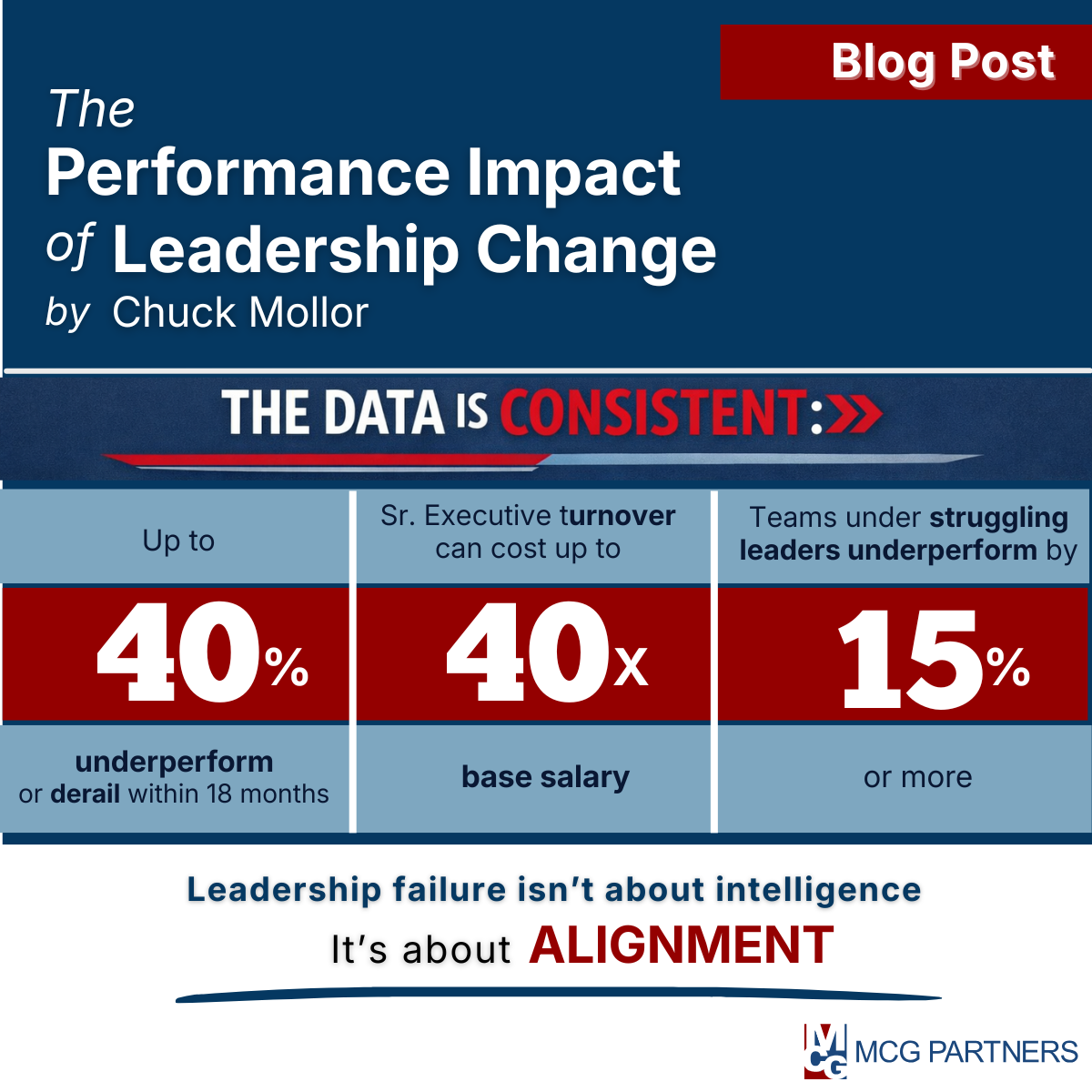
The data is consistent:
- Up to 40% of leaders underperform or derail within 18 months
- Senior executive turnover can cost up to 40x base salary
- Teams under struggling leaders underperform peers by 15% or more
But these outcomes are rarely about intelligence or experience.
They are about misalignment.
Unclear expectations.
Ambiguous decision ownership.
Unspoken political dynamics.
Cultural norms that are never articulated.
Experienced leaders don’t fail because they can’t do the job.
They struggle when the performance expectations around them are undefined.
Entry Into Role Is an Inflection Point
Most organizations still treat leadership entry casually.
A calendar of meetings.
A series of introductions.
A general mandate to “make an impact.”
But the first 90–120 days shape perception, credibility, and trust.
They determine:
- How authority is exercised
- How decisions are made
- How conflict is handled
- How change is created
- Whether enterprise thinking strengthens — or fractures
When expectations are implicit, leaders spend valuable time decoding the organization instead of driving performance.
Structured assimilation accelerates clarity.
And clarity accelerates execution.
Executive Teams Magnify the Impact
Leadership change does not happen in isolation.
It happens inside executive teams.
Even strong CEOs struggle when their teams operate as functional silos rather than a cohesive enterprise body.
What we often observe:
- Updates replace strategic debate
- Decision authority blurs
- Accountability becomes functional instead of collective
- Conflict goes underground
Alignment is not about harmony.
It is about operational clarity under pressure:
- Clear roles and decision authority
- Shared enterprise priorities
- Defined behavioral expectations
- Productive conflict norms
- Unified accountability
When alignment is informal, friction compounds.
When alignment is structured, performance accelerates.
Why We Sharpened Our Focus
At MCG Partners, we refined our work around two leverage points in the leadership system:
- Executive Team Alignment
- New Leader Acceleration & Assimilation
Because leadership change and executive alignment are not development exercises.
They are performance strategy.
They are risk management.
They are cultural stabilization.
In today’s environment, leadership instability is amplified. Boards notice faster. Investors react sooner. Internal confidence shifts quietly before results show it publicly.
Organizations that treat leadership change casually pay for it later.
Organizations that structure it deliberately accelerate traction and reduce avoidable risk.
Leadership effectiveness today requires intention.
Not more activity.
Not more meetings.
Not more good intentions.
Structure.
If you are navigating leadership change or sensing strain at the top; the solution may not be a dramatic overhaul.
It may be disciplined clarity at the moment it matters most.
